Prevent corrosion
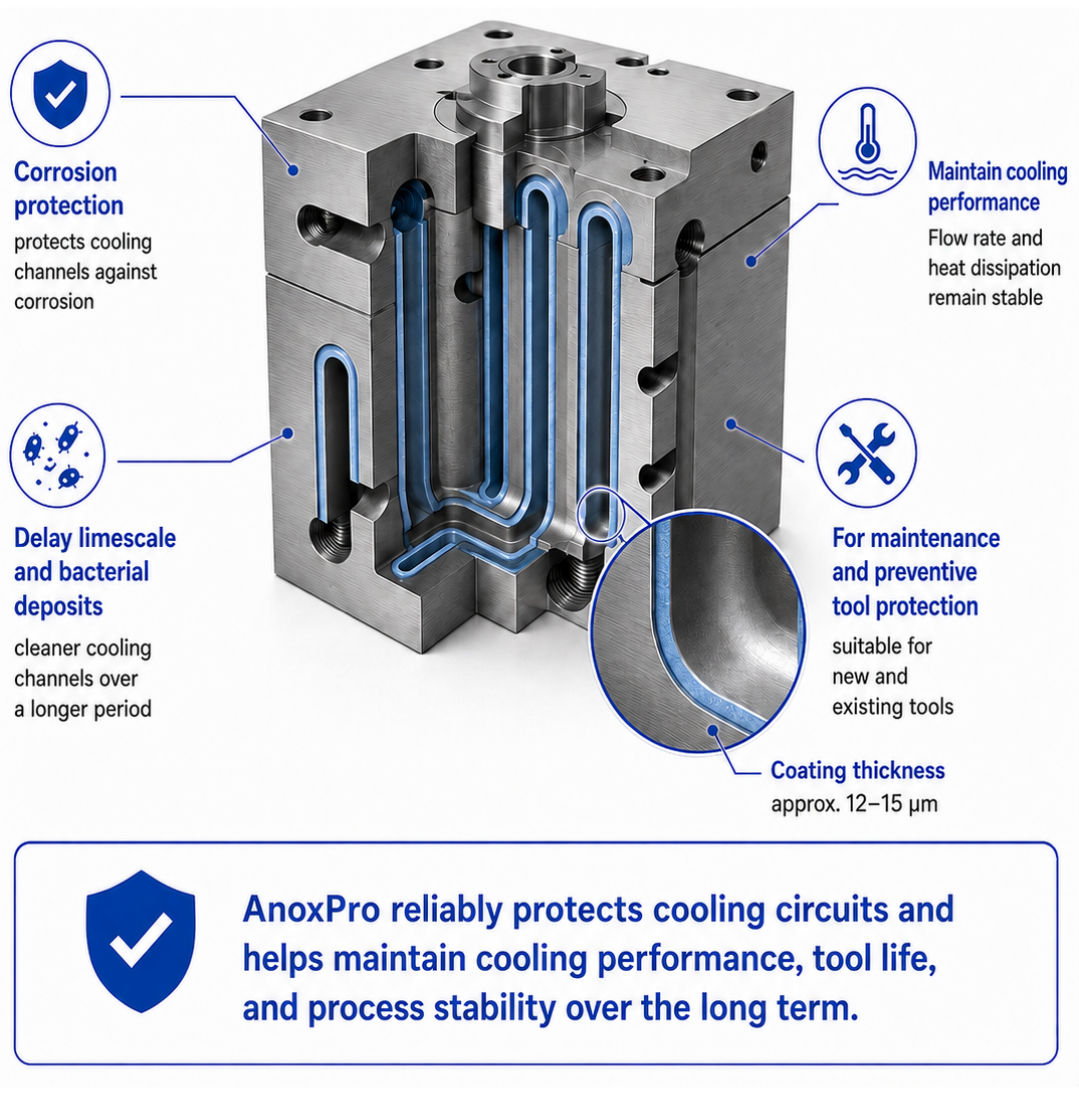
A thin protective coating protects the internal surfaces of the cooling channels.

At a glance
A thin protective coating protects the internal surfaces of the cooling channels.
The treatment targets the formation of limescale, dirt deposits and biofilm.
The aim is to largely maintain flow and heat transfer.
More consistent cooling conditions reduce the need for unplanned maintenance.
Thin protective coating
Flow and cooling performance are largely maintained.
Treat the internal surfaces of the cooling channels before series production starts.
Assess suitability based on channel condition and observed deposits.
Principle & application
Moisture, temperature changes and varying water quality can cause corrosion, deposits, limescale and biofilm in cooling channels.
Narrowed or corroded channels impair flow and heat transfer, potentially affecting process stability, cycle time and part quality.
AnoxPro protects the internal surfaces of cooling channels with a thin, durable coating. It is designed to prevent corrosion and delay deposit formation without significantly impairing the function of the channels.
The coating thickness is approximately 12 to 15 micrometres. Cooling performance and flow are largely maintained.
AnoxPro is suitable as a preventive measure for new moulds and as part of maintenance for existing moulds. The aim is less unplanned maintenance, more stable cooling conditions and a longer service life for temperature-controlled mould areas.
Moisture, temperature changes and varying water quality can promote corrosion and deposits in cooling channels. Changes often go unnoticed for a long time and can impair flow and heat transfer.
The treatment is designed to prevent corrosion and delay deposits, limescale and biofilm formation.
The protective coating is applied so that flow and cooling performance are largely maintained.
AnoxPro is intended both for new moulds and for existing moulds as part of maintenance.
If flow decreases, temperature control is uneven or deposits recur, the suitability of cooling-channel treatment can be assessed for the application.
Selection depends on the plastic, tool material, geometry, temperature, mechanical loading, cleaning conditions and desired function.
Your application
The mould component, plastic and challenge are the starting point for our joint assessment.