Harden the near-surface zone
Additional elements in the steel matrix increase surface hardness and load-bearing capacity.

At a glance
Additional elements in the steel matrix increase surface hardness and load-bearing capacity.
No separate coating is added to the mould contour.
A more homogeneous near-surface zone can reduce carbide pull-out.
The hardened foundation distributes loads and protects thin functional coatings from overloading.
Diffusion without an added coating
Additional elements are introduced into the steel matrix near the surface.
The mould surface becomes more resistant from within the material.
The hardened near-surface zone provides mechanical support for subsequent functional coatings.
Principle & application
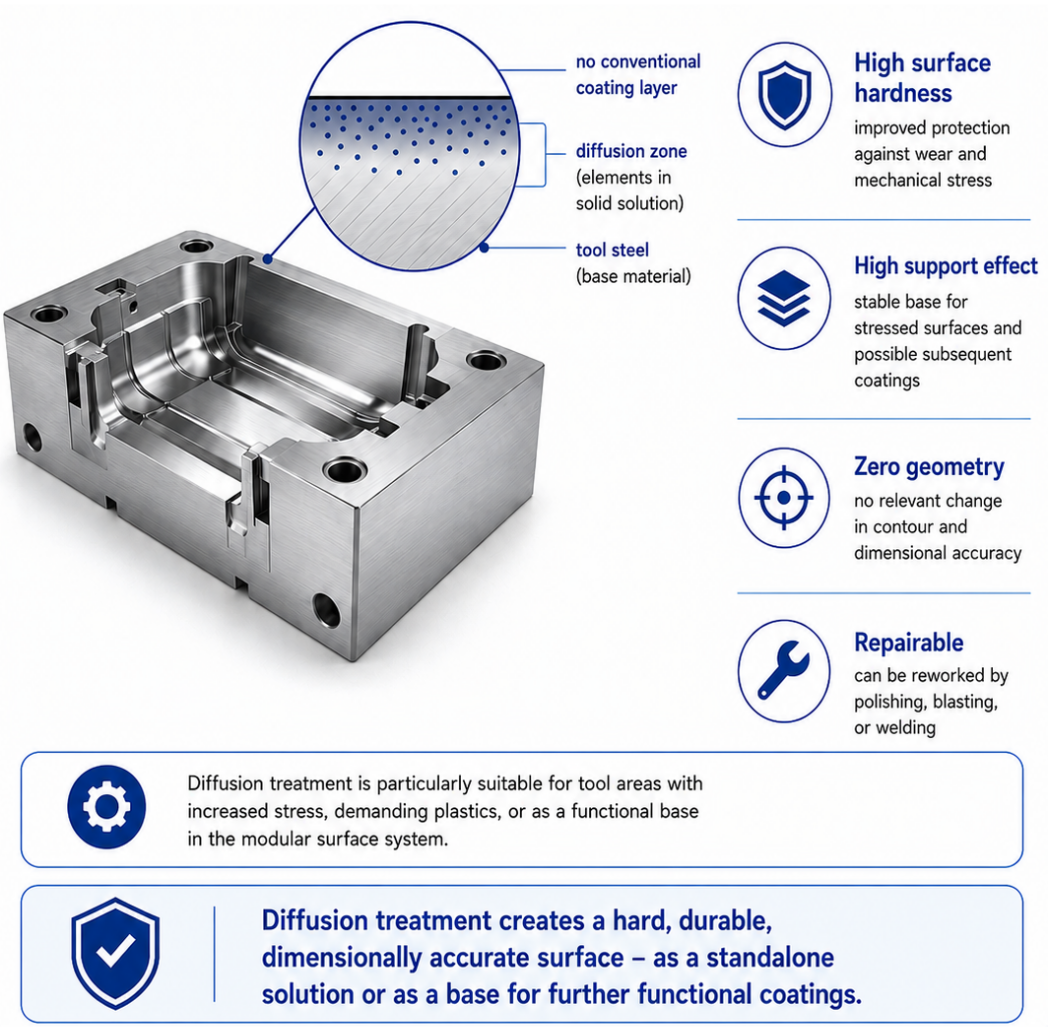
Diffusion treatment is not a conventional coating. Additional elements are introduced into the steel matrix near the surface, making the treated zone harder, more load-bearing and more resistant.
Without a separate coating, the dimensional accuracy of the mould contour is maintained. The surface can be made more homogeneous, carbide pull-out can be reduced and polishability can be improved.
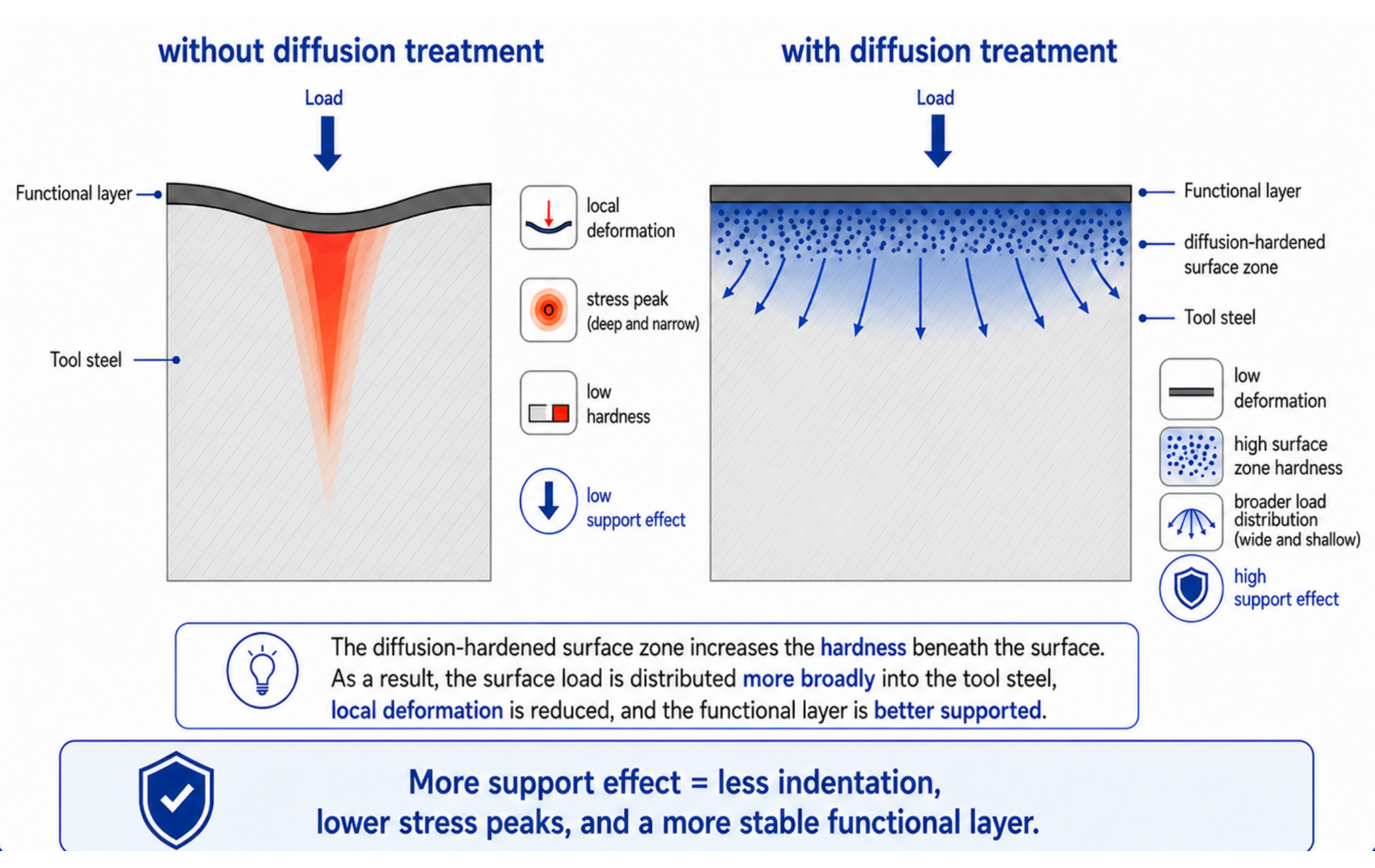
Under mechanical loading, the diffusion-hardened near-surface zone distributes the surface force more broadly into the tool steel. Local deformation and stress peaks are reduced.
This support effect stabilises subsequent thin functional coatings and prevents them from being overloaded when the base material yields.
The treatment is suitable for highly mechanically loaded mould areas, for reducing wear and as a robust foundation for further coatings – on its own or as part of the modular surface toolkit.
Additional elements are introduced into the steel matrix. This makes the treated near-surface zone harder and more resistant, providing better support for subsequent thin functional coatings.
As no separate coating is added, the dimensional accuracy of the mould contour is maintained.
The treatment can help make the surface more homogeneous and reduce carbide pull-out.
For thin functional coatings, the hardened near-surface zone helps stabilise the base material against mechanical loading.
Typical objectives are reducing wear and providing a robust foundation for further coatings. Suitability depends on the tool material and the specific loading conditions.
Selection depends on the plastic, tool material, geometry, temperature, mechanical loading, cleaning conditions and desired function.
Your application
The mould component, plastic and challenge are the starting point for our joint assessment.