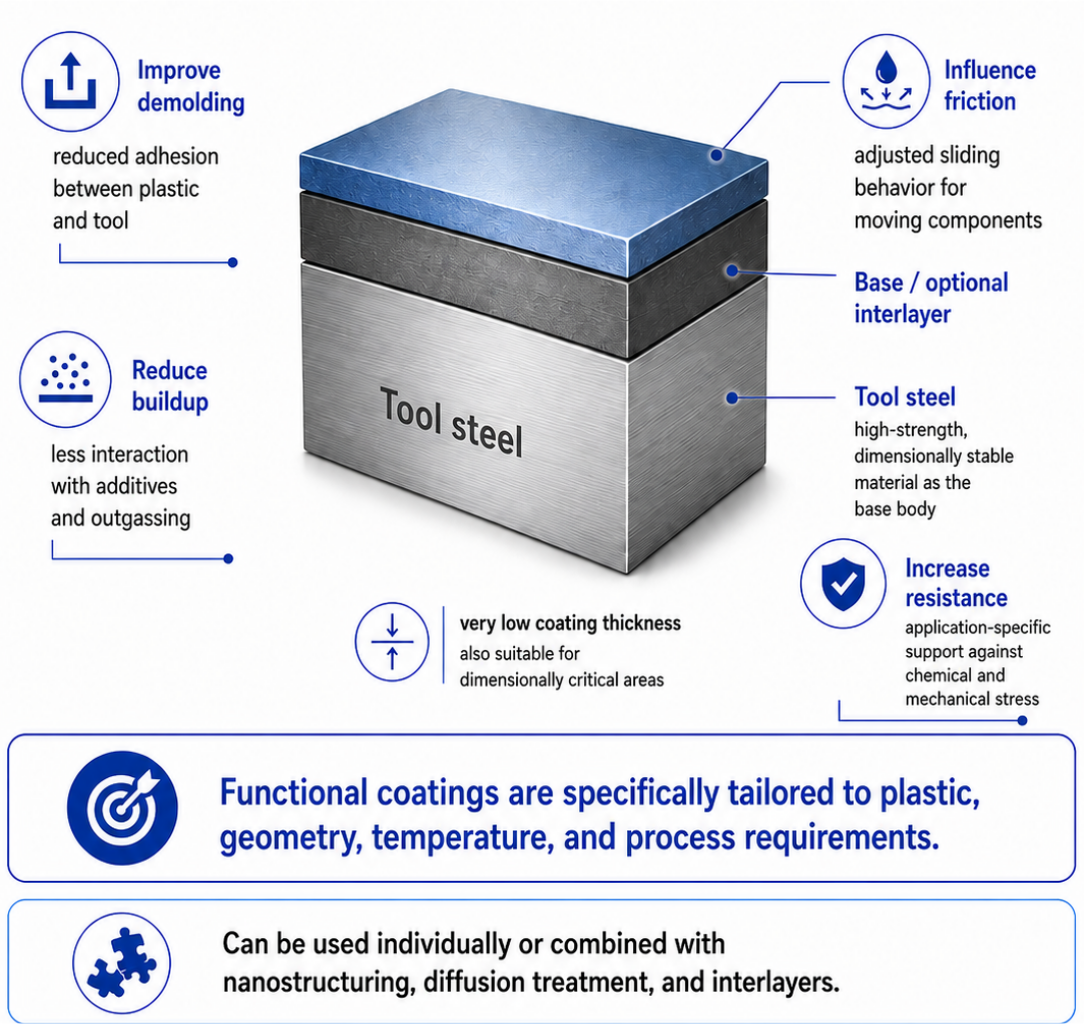
Improve demoulding
The surface function is adapted to the interaction between plastic and the mould.

At a glance
The surface function is adapted to the interaction between plastic and the mould.
Coating, material and process conditions are considered together.
Nanostructure and functional coating can work together as a coordinated system.
CrN, DLC or diffusion treatment are optional components where loading or friction require them.
Select a function
Nanostructure and coating are considered together. CrN and DLC remain supplementary components.
The functional coating is adapted to the plastic, surface energy, mould geometry and observed process behaviour.
The aim is a defined interaction at the direct contact interface.Principle & application
Depending on the application, functional coatings improve demoulding, deposit behaviour, friction or chemical resistance. The desired function takes priority over the coating name.
They are adapted to the plastic, mould geometry, temperature, cleaning and loading, and can be used on their own or together with nanostructuring, diffusion treatment and interlayers.
Interlayers sit between the tool steel and the functional layer. They can improve adhesion, hardness, wear protection, corrosion resistance or sliding behaviour, and provide mechanical support for subsequent coatings.
Selection depends on the plastic, tool material, loading, temperature, cleaning, geometry and desired function.
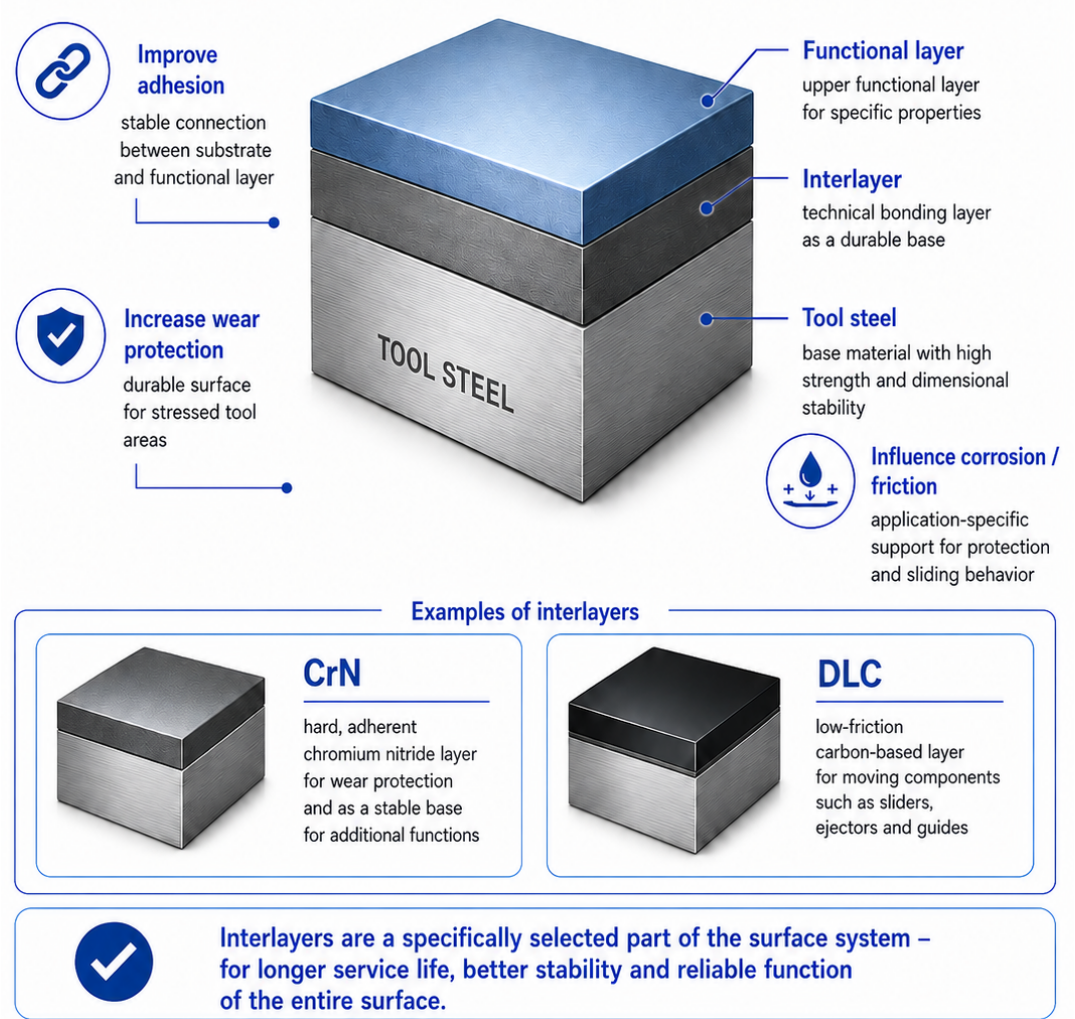
CrN is a hard chromium nitride coating with strong adhesion. It provides wear protection and a stable foundation for further functional surfaces.
DLC is a low-friction, carbon-based coating for moving components such as slides, ejectors and guides. It can prevent fretting corrosion and support dry running.
Plastic, tool steel, geometry, temperature and cleaning conditions determine the design. The coating is considered as part of the entire contact interface, rather than as an isolated material layer.
The desired effect, such as improved demoulding or fewer deposits, is the starting point for selection.
Topography and surface chemistry can be adapted together to the plastic, geometry and process window.
CrN or DLC may be suitable additions where wear protection, adhesion or the sliding behaviour of moving components impose further requirements.
It can be used on its own or combined with nanostructuring, diffusion treatment and optional interlayers. The combination is selected for the specific application.
Selection depends on the plastic, tool material, geometry, temperature, mechanical loading, cleaning conditions and desired function.
Your application
The mould component, plastic and challenge are the starting point for our joint assessment.