Defined gloss level
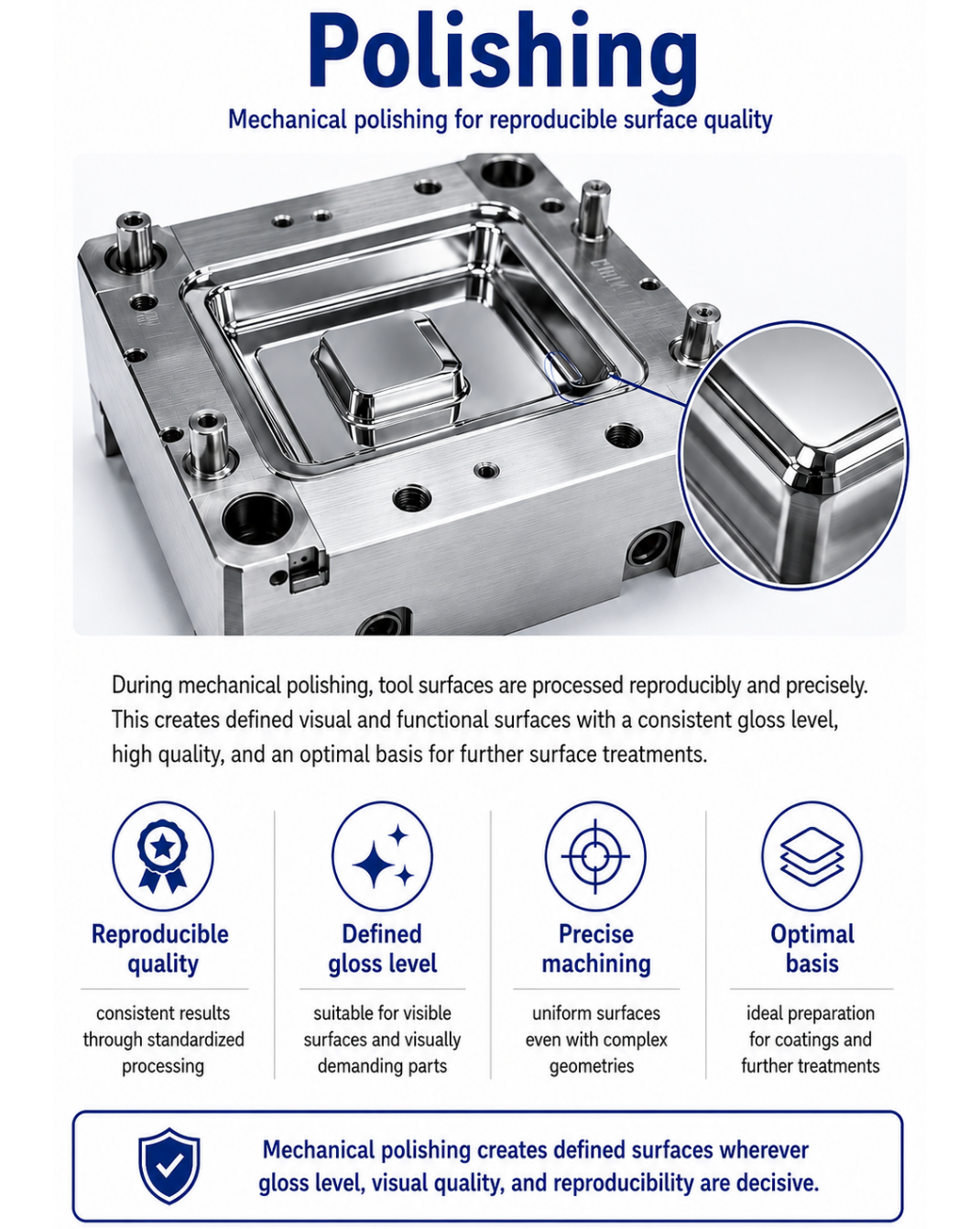
Visible and functional surfaces are polished uniformly and reproducibly.

At a glance
Visible and functional surfaces are polished uniformly and reproducibly.
Contours and functional geometry remain central to the controlled machining process.
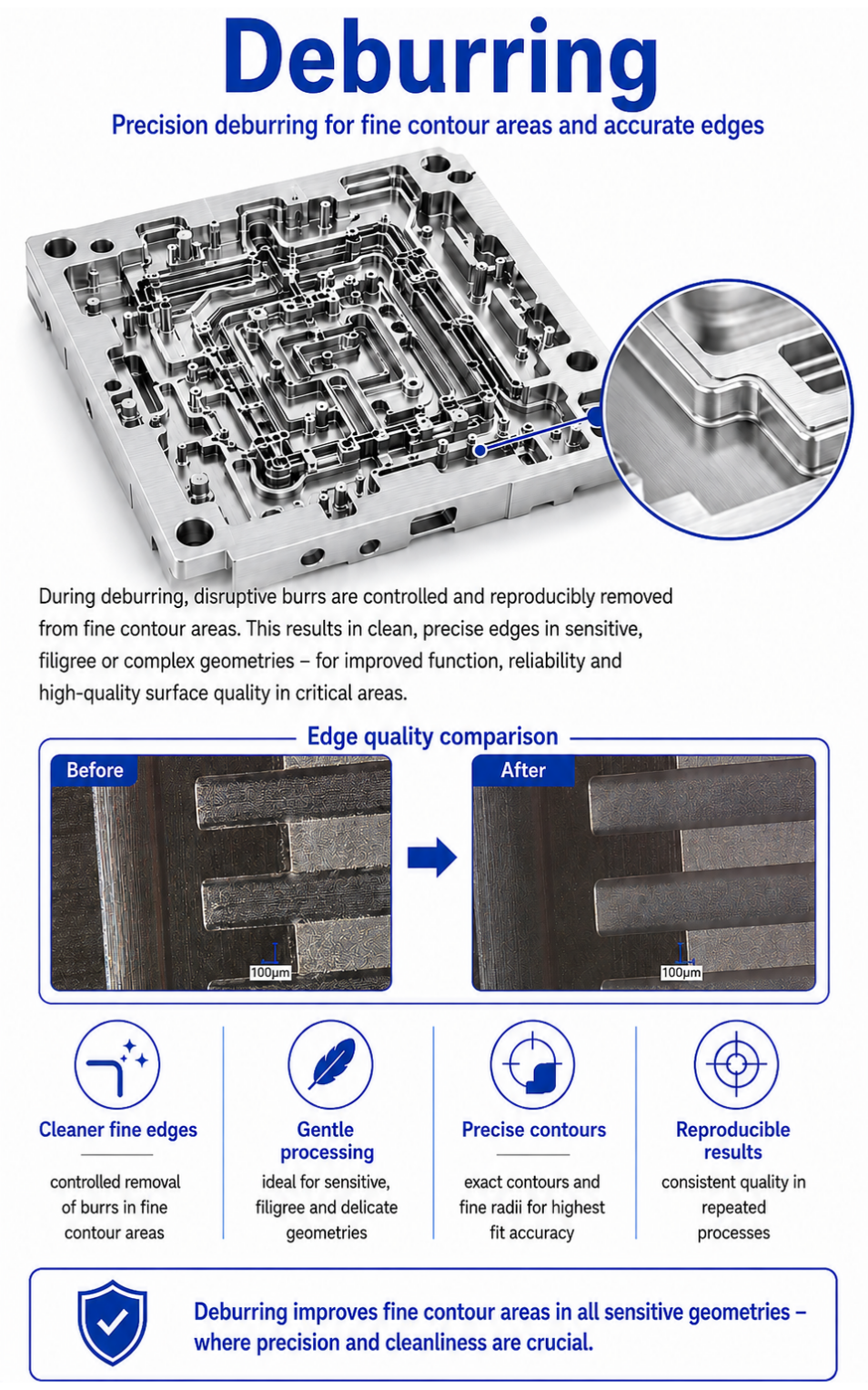
Deburring removes unwanted burrs even from delicate and complex areas.
The defined surface prepares mould surfaces for production or subsequent treatment.
Two machining tasks
For reproducible visible and functional surfaces, including as a foundation for further treatments.
Remove unwanted burrs in a controlled way, with radii and complex geometries in mind.
Principle & application
Mould surfaces are machined reproducibly and precisely. This creates defined visible and functional surfaces with a consistent gloss level, high quality and an optimal foundation for further surface treatments.
Unwanted burrs are removed from fine contour areas in a controlled and reproducible way. This creates clean, precise contours in sensitive, delicate or complex geometries.
The process aims to improve function, reliability and surface quality in sensitive areas. The before-and-after comparison shows the effect on fine contours.
Polishing and deburring address different features of the mould surface. Both processes are adapted in a controlled way to the geometry, functional surface and required surface quality.
Machine polishing finishes visible and functional surfaces reproducibly and precisely, with a consistent gloss level and high surface quality.
Unwanted burrs are removed in a controlled and reproducible way, including in fine contour areas and on demanding geometries.
Both processes create a defined surface as a reliable basis for series production or further surface treatments.
For an initial assessment, it helps to know the affected mould component, its geometry and the observed deviation. Technical options are assessed for the specific application.
Selection depends on the plastic, tool material, geometry, temperature, mechanical loading, cleaning conditions and desired function.
Your application
The mould component, plastic and challenge are the starting point for our joint assessment.